
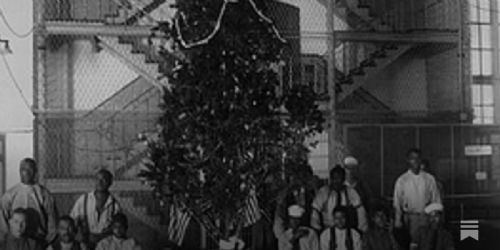
Christmas Behind the Razor Wire: Incarceration, Families, and Hope in Alabama
In Alabama, Christmas is deeply rooted in tradition—church services, family meals, small-town gatherings, and time spent with loved ones. But for thousands of Alabama families impacted by incarceration, the holidays look very different. Our prisons only feed 2 meals on holidays, and even on Christmas they don’t get great meals.
When someone is incarcerated in the Alabama Department of Corrections (ADOC), Christmas doesn’t pause the sentence. Life inside continues as usual—counts, locked doors, long days, many times shake downs all the while families on the outside try to hold everything together.
Christmas Inside Alabama Prisons
For those incarcerated in Alabama, the holiday season can be especially isolating. Many ADOC facilities are located hours away from home communities. Families in Birmingham, Bessemer, Mobile, or Montgomery may drive three to five hours for a visit—if visits are available at all. Many times when families are approved for visits, be in holidays or not, they can drive for hours to their loved ones and be denied visistation by the facility for little to no reason. Many families with loved ones incarcerated in Alabama are already living below the poverty line, and spending money to travel to a prison hours away, have money for concessions during the visit, and then traveling home is a luxury many can't afford. Many incarcerated individuals cannot afford to make phone calls to their loved ones during the holidays, greatly hindering any opportunity of fellowship and connecion.
One OTWH client, incarcerated in south Alabama, shared that Christmas was the hardest day of his sentence. He hadn’t seen his children in over a year because the distance and cost made visits impossible. On Christmas morning, he waited in line just to make a short phone call, listening to his kids describe their gifts while trying not to cry. He told us, “I wanted to be happy for them, but all I could think about was everything I missed.”
For many parents who are incarcerated, Christmas brings overwhelming guilt. Some choose not to call home because hearing their children’s voices hurts too much. Others hold onto photos, drawings, or letters as lifelines through the day.

The number of children with an incarcerated parent has more than tripled since 1980—showing how deeply incarceration has reshaped families across generations.
The Families Left Holding It Together
Incarceration doesn’t just affect the person behind the walls—it reshapes entire households.
We’ve worked with Alabama grandmothers who suddenly become full-time caregivers, stretching fixed incomes to cover school supplies, clothes, and Christmas gifts. One caregiver told us she skipped her own bills in December so her grandchildren wouldn’t feel the absence of their father as deeply on Christmas morning.
For spouses and partners, the holidays often bring exhaustion and loneliness. One OTWH client’s partner shared that Christmas had become the time when the weight of doing everything alone finally hit. She was working two jobs, raising children, and managing the emotional toll of incarceration—while trying to keep hope alive for her family.
Children, especially, carry silent pain. We’ve seen kids struggle to explain to classmates why their parent isn’t home or why they can’t visit. In many rural Alabama communities, access to counseling or support services is limited, leaving families to navigate trauma alone.

Behind every incarceration statistic is a family. Millions of children across the country grow up navigating holidays without a parent at home.
Parole Season and Holiday Anxiety
For many incarcerated people in Alabama, Christmas also falls during parole preparation or decision periods. Instead of peace, the season is filled with uncertainty.
One OTWH client spent December preparing his parole packet while watching others around him lose hope. He told us the fear of another denial overshadowed the holiday. “I didn’t want another Christmas like this,” he said. “I just wanted a chance to come home and do it right.”
Others face disappointment when parole is denied—another year of missed holidays, another season of waiting for their families. Some people have been denied parole for decades all the while keeping a clean record and hoping that one day it will pay off and they will have the chance to celebrate all these holidays with their loved ones free.
Why Reentry Support Matters—Especially at Christmas
In Alabama, where incarceration rates are high and resources are limited, reentry support is critical. The holidays make the gaps in support even more visible.
At On The Way Home Reentry, we work with individuals before release and after return—helping them prepare parole packets, plan for reentry, secure basic needs, and reconnect with their families. We don’t just serve individuals; we support entire families navigating the weight of incarceration. I spoke with one mother this week who was confused about what the next steps were for her son who had recently been granted parole. I spoke with her for over an hour making sure she understood what was happening and what would happen next. She is older and doesn’t drive much so I offered to pick her up and bring her to see his when he gets to the reentry center that he will be at.
One OTWH client came home just days before Christmas. With reentry housing secured and basic needs met, he was able to sit at the table with his family for the first time in years. He told us it wasn’t the gifts that mattered—it was being present. “I finally felt like I belonged again,” he said.
This Christmas, Remember Alabama’s Invisible Families
As Alabama celebrates the season, let’s remember the families separated by prison walls. The children waiting for a phone call. The caregivers doing their best with limited support. The individuals inside holding onto hope for a second chance.
Christmas looks different for families impacted by incarceration—but compassion, preparation, and community support can change what comes next.
Because in Alabama, coming home doesn’t just change one life—it helps heal an entire family.
 Visitor Comments (0)